
Sermon Takeaway 01/18/2026

The Legacy of a Life Well-Lived: Finding Satisfaction in God's Promises
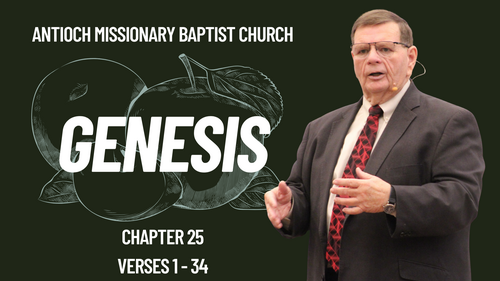
When we open the pages of Genesis 25, we encounter much more than a genealogy filled with difficult-to-pronounce names. Hidden within these verses lies a profound meditation on mortality, purpose, and the faithfulness of God that speaks directly to our deepest fears and highest hopes.
The Principle That Changes Everything
Throughout Scripture, God establishes a pattern that runs counter to human expectation: the older serves the younger. We see it with Cain and Abel, Isaac and Ishmael, Jacob and Esau, and even with David, the eighth son who became king. This isn't arbitrary divine whimsy—it's a foundational truth about redemption itself.
We enter this world as firstborns to sin. The old nature has birthright over us. But God flipped the script. Where the first Adam failed, the second Adam—Jesus Christ—succeeded. When we accept Him, the "younger" nature overcomes the "older" one. The new creation takes precedence over the old.
This principle answers a question that plagues many believers, especially young people walking away from faith: Why? Why does God work this way? Why must salvation come through Christ alone? Why can't good works be enough?
Understanding the why behind God's plan transforms faith from mere historical knowledge into living conviction. Without grasping these deeper truths, we're skating on thin ice when life's storms come.
We enter this world as firstborns to sin. The old nature has birthright over us. But God flipped the script. Where the first Adam failed, the second Adam—Jesus Christ—succeeded. When we accept Him, the "younger" nature overcomes the "older" one. The new creation takes precedence over the old.
This principle answers a question that plagues many believers, especially young people walking away from faith: Why? Why does God work this way? Why must salvation come through Christ alone? Why can't good works be enough?
Understanding the why behind God's plan transforms faith from mere historical knowledge into living conviction. Without grasping these deeper truths, we're skating on thin ice when life's storms come.
The Sovereignty We Must Embrace
Genesis 25 confronts us with an uncomfortable reality: God is sovereign over His creation. This isn't a popular message in our autonomy-obsessed culture. We want to be lords of our own lives, making our own rules, doing what feels right to us.
But Scripture presents a different reality—one where the sovereign God establishes the principles, patterns, and disciplines by which we must live. Within this framework, we encounter difficult doctrines like election, where God separates the saved from the lost according to His purposes.
These aren't comfortable truths. They require us to surrender control. But embedded within God's sovereignty is something beautiful: His absolute faithfulness to His promises.
But Scripture presents a different reality—one where the sovereign God establishes the principles, patterns, and disciplines by which we must live. Within this framework, we encounter difficult doctrines like election, where God separates the saved from the lost according to His purposes.
These aren't comfortable truths. They require us to surrender control. But embedded within God's sovereignty is something beautiful: His absolute faithfulness to His promises.
Promises Kept Across Generations
God promised Abraham a son through Sarah, and Isaac was born. God promised Abraham would be the father of many nations, and the genealogies in Genesis 25 trace those nations emerging. The Midianites, who would later oppress Israel during the time of Gideon, descended from Abraham's union with Keturah. The Edomites would come through Esau.
These weren't random historical footnotes. They were promises fulfilled, even when those fulfillments created future complications. God's faithfulness doesn't mean everything will be easy or comfortable—it means His word will stand regardless.
When Abraham reached 175 years, he had witnessed God's promises taking root. He had seen Isaac marry Rebekah. He had likely met his grandsons Jacob and Esau, who would have been about fifteen when Abraham died. The promise was standing before him in flesh and blood.
These weren't random historical footnotes. They were promises fulfilled, even when those fulfillments created future complications. God's faithfulness doesn't mean everything will be easy or comfortable—it means His word will stand regardless.
When Abraham reached 175 years, he had witnessed God's promises taking root. He had seen Isaac marry Rebekah. He had likely met his grandsons Jacob and Esau, who would have been about fifteen when Abraham died. The promise was standing before him in flesh and blood.
The Art of Living Before Dying
The Scripture records that Abraham "breathed his last and died in a good old age, an old man and full, and was gathered to his people." That simple phrase "and he lived" appears throughout Genesis, but it's easy to miss its significance while focusing on "and he died."
The key isn't merely that Abraham died—death comes to everyone. The key is that Abraham lived.
Did he live perfectly? No. Did he have failures? Absolutely. Were there moments when it seemed he would completely fail God? Yes. But through it all, he was living under the eye of a sovereign God, moving toward the moment when he could truly call God his friend.
How many of us are so frozen by fear of dying that we forget we have today to live? How many are simply marking time, waiting for the inevitable, rather than redeeming each moment?
The measure of life isn't found in its length but in its quality. Abraham was "full"—satisfied, satiated, like someone who has eaten a magnificent meal and pushes back from the table completely content.
Imagine coming to the end of your life, having made mistakes and weathered storms, yet knowing that everything rests in God's hands. You've done what you could do and allowed God to do the rest. You lay your head down in peace, satisfied.
That's not the picture of someone who spent their years grasping for control or worrying about things beyond their reach. Abraham could have worried about Isaac's marriage, about Ishmael's future, about whether his line would continue. But he didn't need to—the evidence of God's faithfulness stood before him.
The key isn't merely that Abraham died—death comes to everyone. The key is that Abraham lived.
Did he live perfectly? No. Did he have failures? Absolutely. Were there moments when it seemed he would completely fail God? Yes. But through it all, he was living under the eye of a sovereign God, moving toward the moment when he could truly call God his friend.
How many of us are so frozen by fear of dying that we forget we have today to live? How many are simply marking time, waiting for the inevitable, rather than redeeming each moment?
The measure of life isn't found in its length but in its quality. Abraham was "full"—satisfied, satiated, like someone who has eaten a magnificent meal and pushes back from the table completely content.
Imagine coming to the end of your life, having made mistakes and weathered storms, yet knowing that everything rests in God's hands. You've done what you could do and allowed God to do the rest. You lay your head down in peace, satisfied.
That's not the picture of someone who spent their years grasping for control or worrying about things beyond their reach. Abraham could have worried about Isaac's marriage, about Ishmael's future, about whether his line would continue. But he didn't need to—the evidence of God's faithfulness stood before him.
The Sermon We Preach Without Words
We preach our most telling sermon at death. When loved ones are laid to rest and we fall apart as though it's the final moment, we reveal what we truly believe about eternity.
The question isn't whether we'll grieve—of course we will. But do we grieve as those who have no hope, or as those who know with certainty that absence from the body means presence with the Lord?
That casket doesn't hold the person we loved. Before the body was prepared for burial, the real person—the eternal soul—had already exited. For those who love Christ, they're already in His presence.
These aren't just comforting words for funerals. These are fundamental truths we must grasp and integrate into our daily lives now. If we don't prepare for these realities today, we won't be able to stand on them when the dark moments come.
The question isn't whether we'll grieve—of course we will. But do we grieve as those who have no hope, or as those who know with certainty that absence from the body means presence with the Lord?
That casket doesn't hold the person we loved. Before the body was prepared for burial, the real person—the eternal soul—had already exited. For those who love Christ, they're already in His presence.
These aren't just comforting words for funerals. These are fundamental truths we must grasp and integrate into our daily lives now. If we don't prepare for these realities today, we won't be able to stand on them when the dark moments come.
Gathered to Your People
When Abraham died, Isaac and Ishmael buried him in the cave of Machpelah beside Sarah. The Scripture says he "was gathered to his people." But his people weren't in that cave—only Sarah's body was there. His relatives were back in Mesopotamia. So what does this phrase mean?
It's a beautiful revelation: this world is not our home. There is indeed a place prepared in heaven for the saints of God. Abraham was gathered to the people of faith—those who looked beyond this world to a city whose builder and maker is God.
Who are your people? Your true family isn't just those connected by blood or ancestry. Your family consists of all who have looked up and seen the hope of heaven, who have trusted in the Savior who died and rose again.
It's a beautiful revelation: this world is not our home. There is indeed a place prepared in heaven for the saints of God. Abraham was gathered to the people of faith—those who looked beyond this world to a city whose builder and maker is God.
Who are your people? Your true family isn't just those connected by blood or ancestry. Your family consists of all who have looked up and seen the hope of heaven, who have trusted in the Savior who died and rose again.
The Question That Demands an Answer
Every person reading these words will one day breathe their last on earth. The only question is: where will you breathe your first breath in eternity?
One of the world's richest men, when dying, was asked what he would give for one more day of life. "Everything I have," he answered. The world thinks that's profound, but it reveals a tragic truth—he was grasping for a world that had nothing to offer him in eternity.
A hundred more years on this planet wouldn't be worth trading Jesus and the hope of heaven.
You can be gathered with all the world offers and all it thinks it has, marching toward an eternal grave. Or you can be gathered to your people—the saints of God—breathing your first breath in a place where eye has not seen, nor ear heard, nor has it entered into the mind of man what God has prepared.
One of the world's richest men, when dying, was asked what he would give for one more day of life. "Everything I have," he answered. The world thinks that's profound, but it reveals a tragic truth—he was grasping for a world that had nothing to offer him in eternity.
A hundred more years on this planet wouldn't be worth trading Jesus and the hope of heaven.
You can be gathered with all the world offers and all it thinks it has, marching toward an eternal grave. Or you can be gathered to your people—the saints of God—breathing your first breath in a place where eye has not seen, nor ear heard, nor has it entered into the mind of man what God has prepared.
The choice before us isn't about the length of our days but their quality. It's about living full, satisfied lives under God's sovereign care, trusting His promises, and looking forward to that moment when we exchange the smog and pollen of earth for the pristine air of heaven.
Where will you be gathered when that last breath comes?
Where will you be gathered when that last breath comes?
Watch the full sermon here:
Recent Takeaways
Archive
2026
2025
March
September
October
November
No Comments