
Sermon Takeaway 12/28/2025
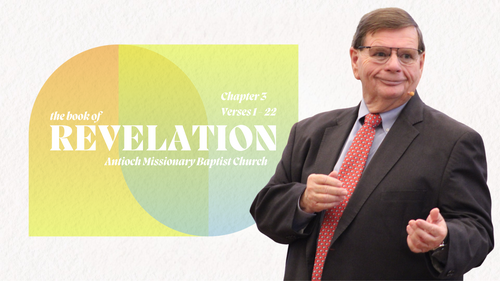
Living in the Last Days: Three Churches, Three Choices
History has a way of repeating itself, but not in circles—rather, it moves forward on a timeline established by God, from creation to consummation. As we stand at the threshold of a new year, it's worth asking: Where are we on God's timeline? And more importantly, what does that mean for how we live our faith today?
The Persistent Lie About Israel
Throughout history, a dangerous falsehood has circulated: that the modern nation of Israel has no connection to the biblical Israel. This lie has gained traction in our digital age, especially among younger generations consuming content through social media platforms.
Yet history tells a different story. From the destruction of the temple in 70 AD under General Titus, through the devastating diaspora under Emperor Hadrian in 130 AD, across medieval persecutions during the Crusades and Spanish Inquisition, through the pogroms of Russia and Poland, to the Holocaust's attempted annihilation of six million Jews—the Jewish people have maintained their identity, their synagogues, their sacred texts, and their connection to the land God promised Abraham, Isaac, and Jacob.
When Israel was reestablished as a nation on May 14, 1948, it wasn't a political accident. It was a fulfillment of God's faithfulness to a people who, despite their rebellion and stubbornness, remain under His watchful care. Supporting Israel doesn't mean agreeing with every governmental decision, but it does mean recognizing God's ongoing covenant with His chosen people.
The church has not replaced Israel. We are the bride of Christ, called out during this age to receive salvation by faith alone through Christ alone—not through works, not through conditions, but through the finished work of the cross.
Yet history tells a different story. From the destruction of the temple in 70 AD under General Titus, through the devastating diaspora under Emperor Hadrian in 130 AD, across medieval persecutions during the Crusades and Spanish Inquisition, through the pogroms of Russia and Poland, to the Holocaust's attempted annihilation of six million Jews—the Jewish people have maintained their identity, their synagogues, their sacred texts, and their connection to the land God promised Abraham, Isaac, and Jacob.
When Israel was reestablished as a nation on May 14, 1948, it wasn't a political accident. It was a fulfillment of God's faithfulness to a people who, despite their rebellion and stubbornness, remain under His watchful care. Supporting Israel doesn't mean agreeing with every governmental decision, but it does mean recognizing God's ongoing covenant with His chosen people.
The church has not replaced Israel. We are the bride of Christ, called out during this age to receive salvation by faith alone through Christ alone—not through works, not through conditions, but through the finished work of the cross.
Signs of Lawlessness
Second Thessalonians reminds us that we are not children of darkness but children of light, meant to discern the times in which we live. One unmistakable sign of the last days is the spirit of lawlessness pervading society.
This isn't merely about criminal activity. It's about humanity shaking its fist at God, declaring independence from His natural and moral order. We see it in the casual dismissal of marriage, the devastation of families, and the normalization of living according to fleshly desires without regard for divine boundaries.
We also witness lawlessness against the very fabric of society itself. Borders mean nothing. Nationalism—the healthy love of one's own country—is vilified as dangerous. Elite powers work to dissolve national identities in pursuit of a one-world system, exactly as prophesied in Scripture.
This isn't merely about criminal activity. It's about humanity shaking its fist at God, declaring independence from His natural and moral order. We see it in the casual dismissal of marriage, the devastation of families, and the normalization of living according to fleshly desires without regard for divine boundaries.
We also witness lawlessness against the very fabric of society itself. Borders mean nothing. Nationalism—the healthy love of one's own country—is vilified as dangerous. Elite powers work to dissolve national identities in pursuit of a one-world system, exactly as prophesied in Scripture.
Technology and the End Times
For centuries, certain biblical prophecies seemed impossible. How could the entire world come under one economic system? How could every transaction be monitored and controlled?
Today, we have our answer: cryptocurrency and digital currency systems. While technological advancement isn't inherently evil, it creates the infrastructure for what Revelation describes—a world where buying and selling can be restricted with the push of a button, where compliance with a global system becomes the price of participation in commerce.
Consider the acceleration of change. The Industrial Revolution transformed society over 150-200 years. The Information Age revolutionized our world in just 30 years. Now we stand at the beginning of the AI age, where transformation will happen in perhaps 5-10 years. Each epoch compresses, speeding toward a culmination point.
These aren't reasons for fear among believers, but they are reasons for awareness. We live in remarkable times, likely the last hours of the church age.
Today, we have our answer: cryptocurrency and digital currency systems. While technological advancement isn't inherently evil, it creates the infrastructure for what Revelation describes—a world where buying and selling can be restricted with the push of a button, where compliance with a global system becomes the price of participation in commerce.
Consider the acceleration of change. The Industrial Revolution transformed society over 150-200 years. The Information Age revolutionized our world in just 30 years. Now we stand at the beginning of the AI age, where transformation will happen in perhaps 5-10 years. Each epoch compresses, speeding toward a culmination point.
These aren't reasons for fear among believers, but they are reasons for awareness. We live in remarkable times, likely the last hours of the church age.
Three Churches, Three Destinies
Revelation chapter 3 presents us with three churches that represent not only historical congregations but also types of churches existing today—and three possible conditions of our own hearts.
The Church of Sardis: Dead but Unaware
"You have a name that you are alive, but you are dead." This is the church that claims Christ but has abandoned Him in practice. It no longer proclaims the gospel, no longer holds to biblical truth, no longer allows the Holy Spirit to work. It regulates religion while rejecting relationship.
This church violates the third commandment—not by cursing, but by taking God's name in vain, claiming to represent Him while living in opposition to Him. Many European churches, bound by tradition and hierarchy, exemplify this deadness. They crush their people under religious control rather than liberating them through Christ.
This church violates the third commandment—not by cursing, but by taking God's name in vain, claiming to represent Him while living in opposition to Him. Many European churches, bound by tradition and hierarchy, exemplify this deadness. They crush their people under religious control rather than liberating them through Christ.
The Church of Laodicea: Lukewarm and Comfortable
"Because you are lukewarm, and neither cold nor hot, I will vomit you out of My mouth." This is the American church—capable of great things but inconsistent, up and down, hot and cold.
This church wants Jesus without suffering. It wants praise without repentance. It will stand and sing enthusiastically but sits silent when the Word convicts. It seeks comfort, luxury, and an easy path to heaven.
God's assessment is devastating: "You say, 'I am rich, have become wealthy, and have need of nothing'—and do not know that you are wretched, miserable, poor, blind, and naked."
The solution? Repentance. True revival begins with seeing ourselves as God sees us, falling at His feet, and admitting our unworthiness.
This church wants Jesus without suffering. It wants praise without repentance. It will stand and sing enthusiastically but sits silent when the Word convicts. It seeks comfort, luxury, and an easy path to heaven.
God's assessment is devastating: "You say, 'I am rich, have become wealthy, and have need of nothing'—and do not know that you are wretched, miserable, poor, blind, and naked."
The solution? Repentance. True revival begins with seeing ourselves as God sees us, falling at His feet, and admitting our unworthiness.
The Church of Philadelphia: Faithful and Approved
"I have set before you an open door, and no one can shut it." This is the church God commends—faithful, persevering, keeping His word despite having little strength.
Remarkably, this church thrives today in the most unexpected places. In Iran—modern Persia—the fastest-growing Christian movement in the world flourishes despite brutal persecution. In Nigeria and Sudan, believers face massacre yet refuse to deny Christ. In China, decades of oppression have only strengthened the underground church.
These believers would rather stand for Jesus and face prison or death than hide their faith. They understand what many comfortable Western Christians have forgotten: following Christ may cost everything, and He is worth it.
Remarkably, this church thrives today in the most unexpected places. In Iran—modern Persia—the fastest-growing Christian movement in the world flourishes despite brutal persecution. In Nigeria and Sudan, believers face massacre yet refuse to deny Christ. In China, decades of oppression have only strengthened the underground church.
These believers would rather stand for Jesus and face prison or death than hide their faith. They understand what many comfortable Western Christians have forgotten: following Christ may cost everything, and He is worth it.
The Choice Before Us
Which church are you? Dead, going through religious motions while spiritually lifeless? Lukewarm, enjoying Christianity when convenient but unwilling to sacrifice? Or faithful like Philadelphia, ready to stand regardless of cost?
The answer begins with honest self-examination. Do you love God's Word, or is it an obligation? Does anything come between you and Him—children, career, comfort, reputation? Are you willing to give not just your money but your life?
If you won't give what you value, you'll never give yourself.
The call is clear: Wake up. Repent. Return to passionate, costly, authentic faith. The Holy Spirit stands ready to convict, cleanse, and restore. The question is whether we'll respond.
We live in the last days. The return of Christ is imminent. How will He find us when He comes—dead, lukewarm, or faithfully serving?
The choice is ours.
The answer begins with honest self-examination. Do you love God's Word, or is it an obligation? Does anything come between you and Him—children, career, comfort, reputation? Are you willing to give not just your money but your life?
If you won't give what you value, you'll never give yourself.
The call is clear: Wake up. Repent. Return to passionate, costly, authentic faith. The Holy Spirit stands ready to convict, cleanse, and restore. The question is whether we'll respond.
We live in the last days. The return of Christ is imminent. How will He find us when He comes—dead, lukewarm, or faithfully serving?
The choice is ours.
Watch the full sermon here:
Recent Takeaways
Archive
2026
January
September
2025
March
September
October
November
No Comments